
Forge new ideas
Come learn about the research findings from more than 100 students participating in this semester’s Forge Expo.
Tuesday, Nov. 18, 1–3 p.m., Memorial Union, Tempe campus
Forge: to form or make, especially by concentrated effort
The Fulton Forge Student Research Expo is a public showcase of faculty-led research performed by Fulton Schools undergraduate and graduate students.
Students who participate in our three primary research programs are invited to present their findings each semester at the Expo.
Summer and fall 2025 featured projects
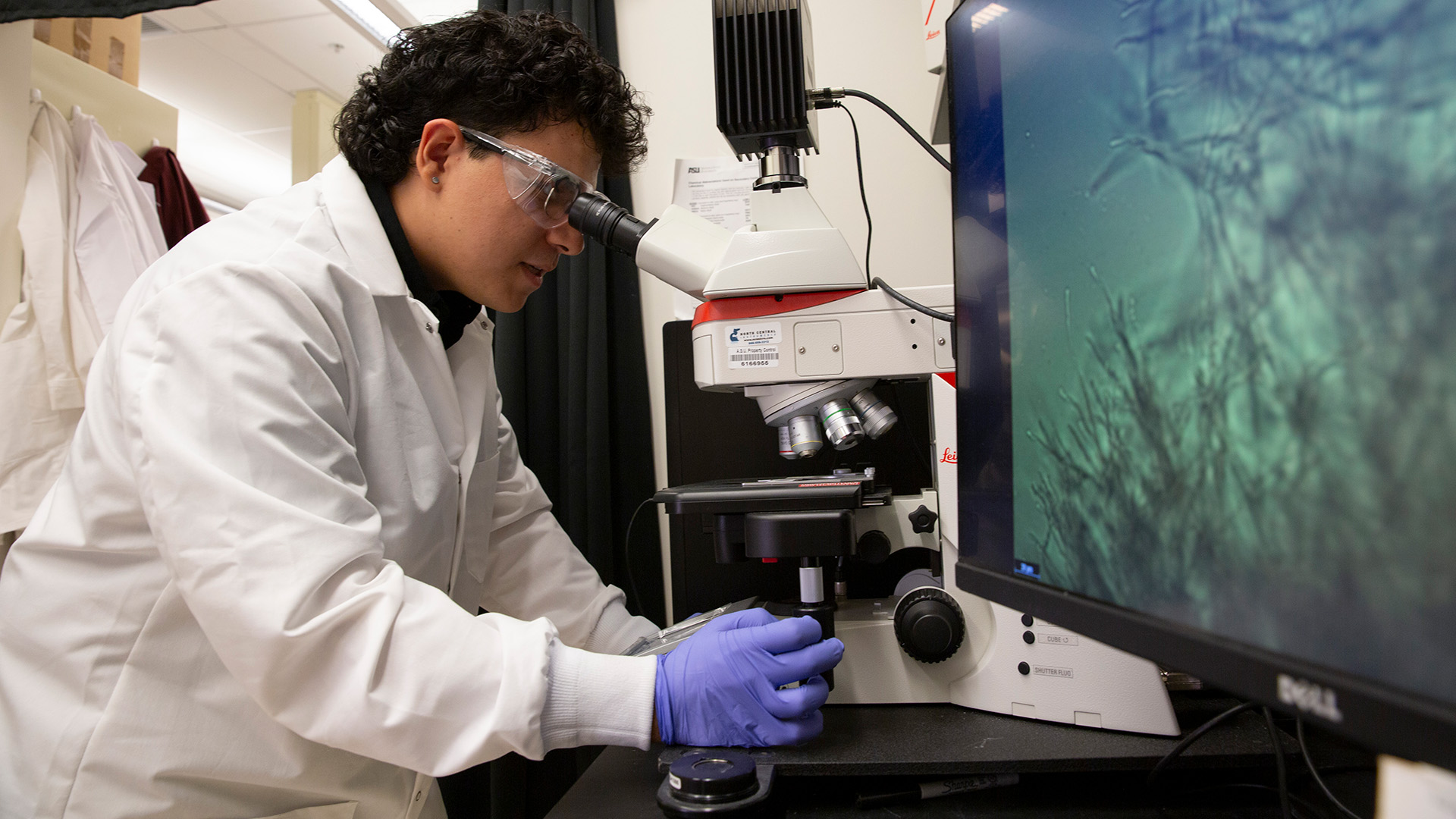
Diego Sanchez
Environmental engineering
Ozone Nanobubbles for Algae Control in Freshwater and Brackish Water Systems
Studying ozone nanobubbles in fresh and brackish water to assess their effectiveness and sustainability for harmful algal bloom treatment.
Mentor: Jesus Moron-Lopez, Sergi Garcia Segura
Program: FURI
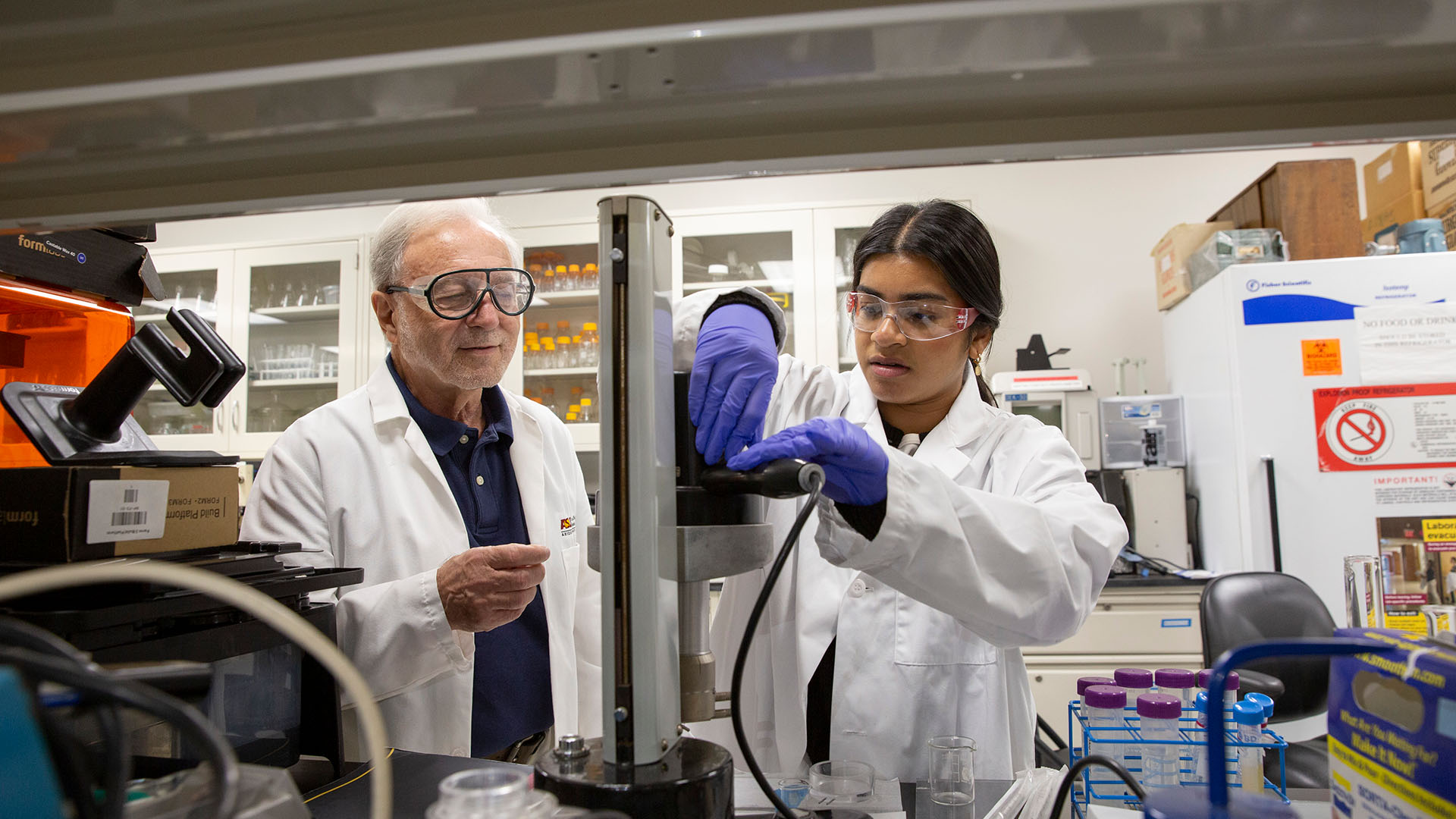
Munia Ahmed
Biomedical engineering
Evaluation of Aging of Calcium and Phosphate Sol-gel Precursor Solutions of Conformal Orthopedic Hydroxyapatite (HA) Implant Coating Quality
Characterizing the sol-gel chemistry aging process on HA dip coatings will help determine the optimal conditions for HA implant coatings.
Mentor: Vincent Pizziconi
Program: GCSP research stipend

Sameera Shah
Computer science
Exploring and Explaining the Performance of PREP’s Impact on GenProg
Improving software reliability and security by studying how program structure influences the effectiveness of automated repair tools.
Mentor: Stephanie Forrest
Program: FURI

Ahadu Tsotaselassie Assegued
Aerospace engineering
Handheld Off-the-shelf Multispectral Spectrometer for Improving Water Quality Estimations from Satellite-based Earth Observation
Using affordable and user-friendly spectrometers for water and soil quality assessment for satellite-based Earth Observation calibration.
Mentor: Saurav Kumar
Program: FURI

Shira Shecter
Chemical engineering
Optimizing Transformation Conditions for the Cyanobacterium Synechococcus sp. PCC 11901
Improving transformation efficiency will make the cyanobacterium a more effective host for developing sustainable fuels and chemicals.
Mentor: Arul Varman
Program: FURI

Zeyad George
Electrical engineering
Code-Based Interpretation and Descriptor Extraction from Battery Performance Data
Designing a desktop application that helps visualize battery characteristics assists individuals to compare contrasting battery data.
Mentor: Yoon Hwa
Program: FURI
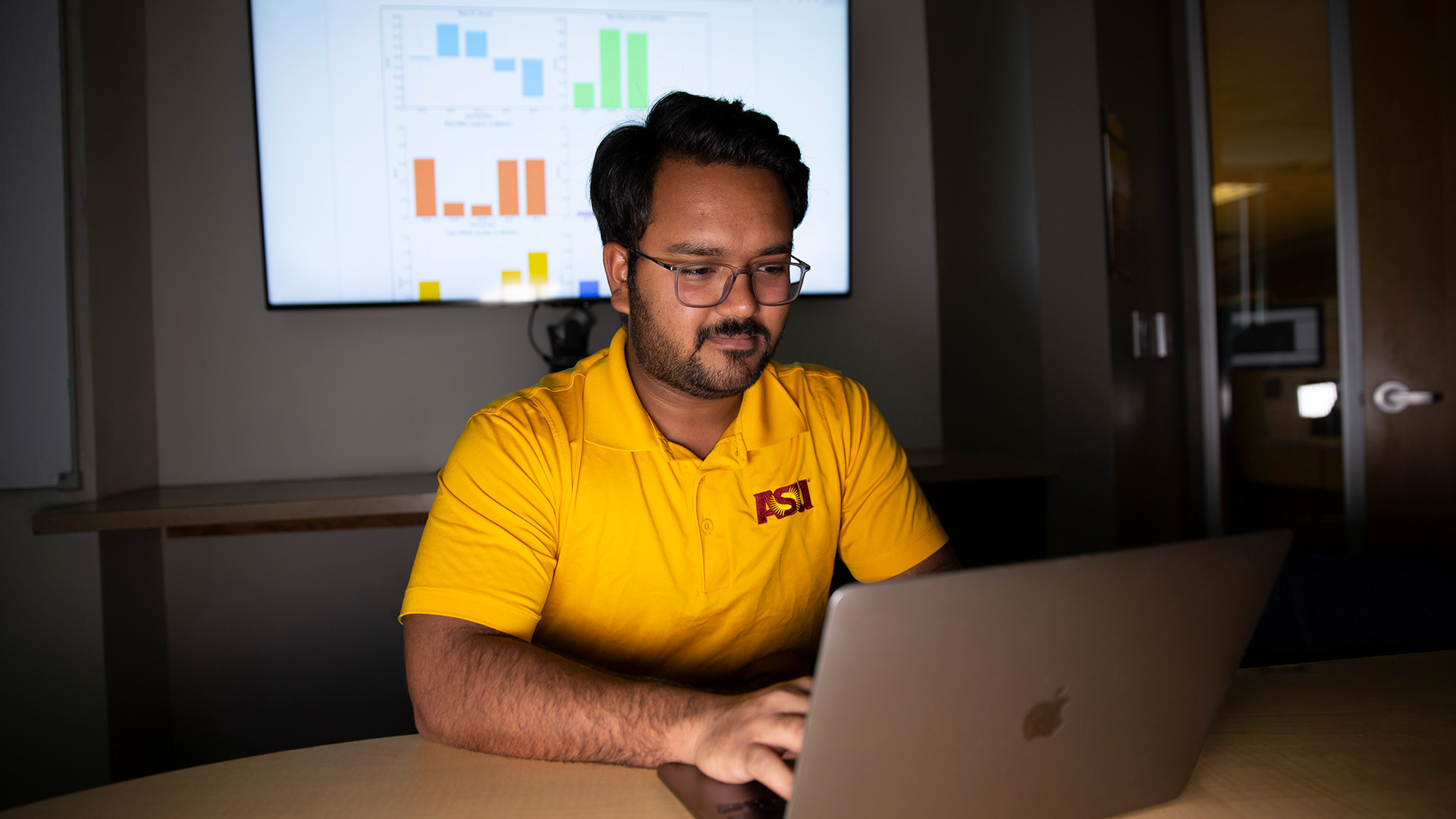
Kumar Satvik Chaudhary
Computer science
EduCBM: Concept Bottleneck Models for Interpretable Education
Teaching AI to explain its reasoning helps stakeholders understand not just what is right, but why it is right.
Mentor: Huan Liu
Program: FURI
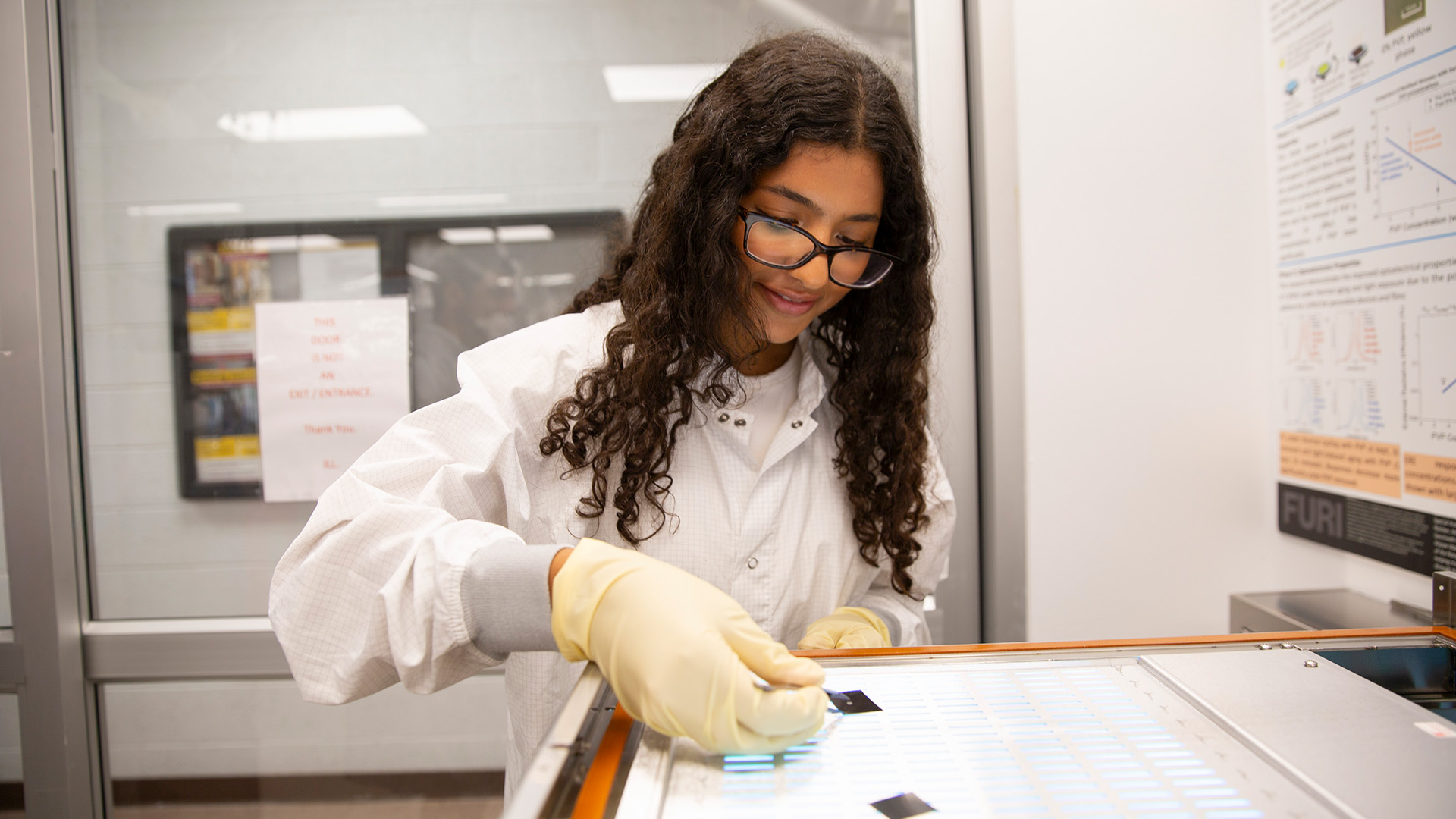
Sidra Elsaady
Engineering (electrical systems)
Evaluating UV Ozone vs. Open-Air Plasma Comparisons for Underfill Effectiveness
Open-air plasma could replace UV ozone by improving surface roughness, wettability, adhesion, and reliability in semiconductor packaging.
Mentor: Nick Rolston
Program: FURI
- Ozone Nanobubbles for Algae Control in Freshwater and Brackish Water Systems by Diego Sanchez
- Evaluation of Aging of Calcium and Phosphate Sol-gel Precursor Solutions of Conformal Orthopedic Hydroxyapatite (HA) Implant Coating Quality by Munia Ahmed
- Exploring and Explaining the Performance of PREP’s Impact on GenProg by Sameera Shah
- Handheld Off-the-shelf Multispectral Spectrometer for Improving Water Quality Estimations from Satellite-based Earth Observation by Ahadu Tsotaselassie Assegued
- Optimizing Transformation Conditions for the Cyanobacterium Synechococcus sp. PCC 11901 by Shira Shecter
- Code-Based Interpretation and Descriptor Extraction from Battery Performance Data by Zeyad George
- EduCBM: Concept Bottleneck Models for Interpretable Education by Kumar Satvik Chaudhary
- Evaluating UV Ozone vs. Open-Air Plasma Comparisons for Underfill Effectiveness by Sidra Elsaady
Student research programs
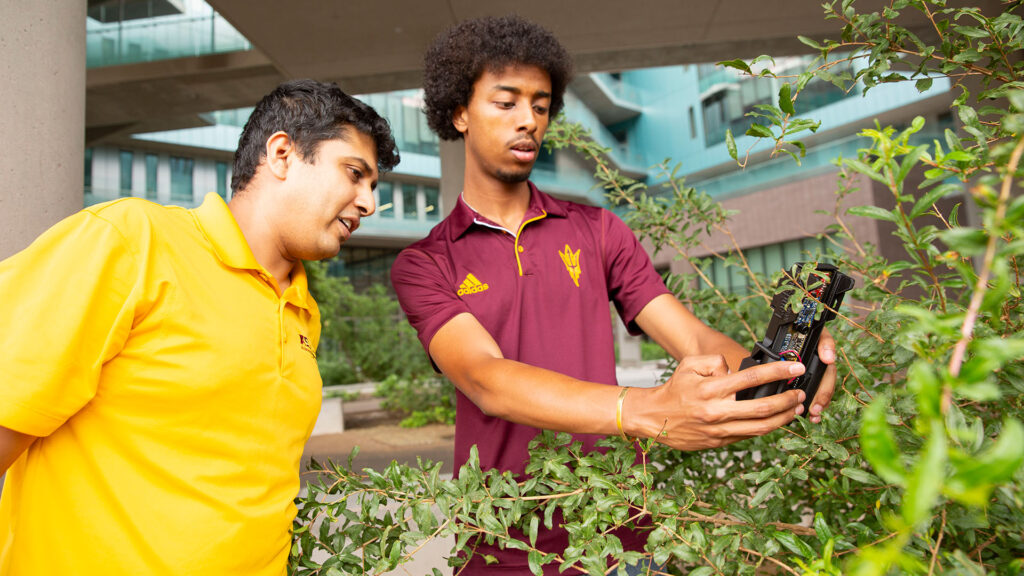
A value of the Fulton Schools is to build a foundation for all to be successful. To prepare our students for success in an engineering or technical career, we provide undergraduate and graduate research opportunities. Each semester we invite student researchers participating in the following three programs to present their work at the Fulton Forge Student Research Expo.
Fulton Undergraduate Research Initiative (FURI)
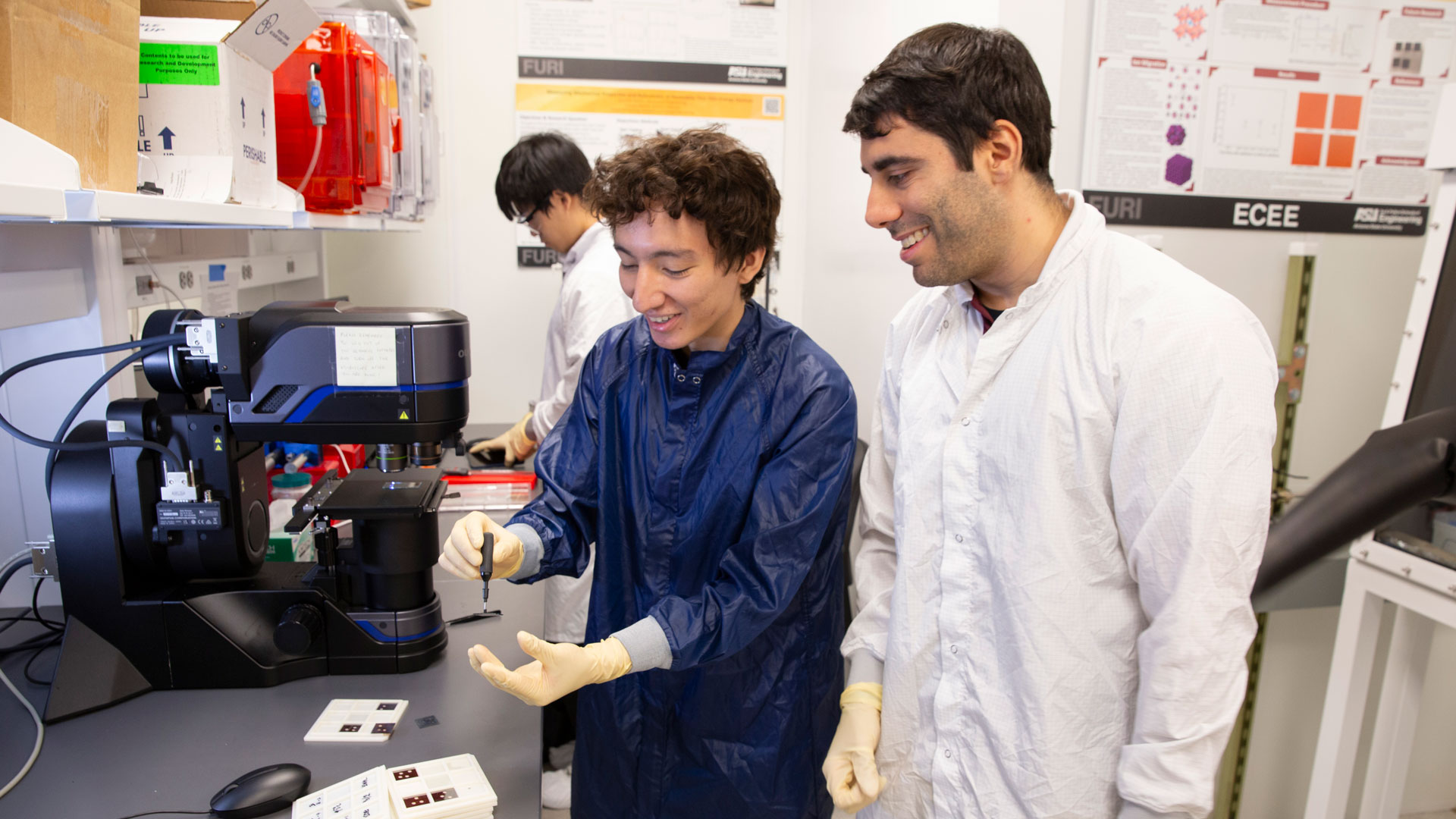
The Fulton Undergraduate Research Initiative enhances an undergraduate student’s engineering experience and technical education by providing hands-on lab experience, independent and thesis-based research, and travel to national conferences.
Grand Challenges Scholars Program (GCSP) research stipend
The Grand Challenges Scholars Program combines innovative curriculum and cutting-edge research experiences into an intellectual fusion that spans academic disciplines and includes entrepreneurial, global and service learning opportunities. Students funded by a GCSP research stipend conduct research in a grand challenges theme and are invited to present their findings at the Fulton Forge Student Research Expo.
Master’s Opportunity for Research in Engineering (MORE)
The Master’s Opportunity for Research in Engineering program is designed to enrich a graduate student’s engineering and technical graduate curriculum with hands-on lab experience and independent and thesis-based research.
Sponsored students
Some of our researchers get extra funding through grants, industry and alumni sponsors. To learn more about sponsorship, contact the Fulton Schools Development team.
Ahmad Family Fulton Undergraduate Research Initiative Fund
Jalal U. and Syeda F. Ahmad and their children — Jaheen N., Raisa N. and Nafisah N., all of whom attended the Fulton Schools — established a fund to give back and support undergraduate students in their pursuit of knowledge and the advancement of research. Their endowment, which funds a materials science, mechanical, biomedical or electrical engineering student, was created to help more students have the life-changing experience of conducting research through FURI.
Summer and fall 2025 snapshot
In fall 2025, 121 students participated in individual research projects.
FURIprojects
FURImentors
MOREprojects
MOREmentors
GCSP research stipendprojects
GCSP research stipendmentors
Research themes
Students work on projects related to seven different themes that represent the Fulton Schools’ core research disciplines.

Data
In an increasingly digital world, data collection is growing at a rapid pace. Fulton Schools faculty and student researchers are devising innovative approaches and tools that will help us better process, analyze, use, manage and access data. New computational tools, algorithms and data analysis techniques, including hardware and software approaches, machine learning, data analytics, data-driven decision-making and more will help advance scientific discoveries and collaborations across multiple fields where data use and capture is ubiquitous.
Education
We are engaged in advancing the ways we educate engineering students. The Fulton Schools’ research focuses on learning methods, cognitive theory and best teaching practices, as well as the integration of engineering concepts in K-12 educational programs to engage students early and educate our community about the impact engineering has on everyday life.
Energy
The urgency to discover and deploy new forms of carbon-reducing energy technologies has become an indispensable part of our economic and environmental landscape. The Fulton Schools’ research in renewable and alternative energy sources is multifaceted with efforts in solar and photovoltaic energy, biotechnology, low- and high-power energy storage, power electronics, electric power systems, batteries and hydrogen fuel cells.
Health
The Fulton Schools’ efforts in health innovation range from understanding the causes behind Alzheimer’s disease and improving methods for predicting epileptic seizures to developing advanced biosensors, bioassays and lab-on-a-chip devices for clinical diagnostics. Additional areas of research exist in novel biological materials, neural engineering, biomedical informatics, drug-delivery systems, health care systems analysis and modeling, health monitoring devices and human rehabilitation technologies.
Security
As technology develops at a faster rate, there is a growing need to develop engineering systems to keep people and infrastructure secure, including securing cyberspace, developing secure communications, developing self-healing systems resilient to attack and identifying, monitoring and reducing threats. Fulton Schools researchers — faculty and students — are addressing issues of national defense, homeland security, border security, cyberwarfare and more, devising technology solutions as well as legal, policy and social implications.
Sustainability
The central thrust behind sustainability is the capacity of metropolitan areas to grow and prosper without destroying or depleting natural resources. The Fulton Schools’ research focuses on restoring and improving urban infrastructure, access to clean water and air, advanced construction techniques and management, environmental fluid dynamics, transportation planning, as well as geotechnical and geoenvironmental engineering.
Semiconductor manufacturing
Semiconductor devices are part of our everyday lives and the demand for techniques and processes to promote them continues to grow. Fulton Schools researchers are driving innovation forward through advances in areas such as power electronics, wireless and mixed-signal circuit design, memory devices and architectures, solar energy and batteries, advanced packaging and new semiconductor materials. Expansive industry collaborations and unique facilities at ASU center Arizona as a hub for the American semiconductor revolution.Outstanding faculty mentors
Fulton Schools faculty members guide students through the research process in their role as FURI, MORE and GCSP research stipend program mentors. Each semester, these research programs select an outstanding faculty mentor from student nominations. These mentors share expertise, empower growth and autonomy, and support student success in a variety of research endeavors. Learn more about this semester’s awardees.
Rakibul Hasan, featured GCSP research stipend mentor
Rakibul Hasan is an assistant professor of computer science and engineering in the School of Computing and Augmented Intelligence. Hasan’s research focuses on public privacy and security, especially as it relates to electronic technology. He began mentoring students in the FURI and GCSP research stipend programs when he began working as a faculty member at ASU in 2022.
Saurav Kumar, featured FURI mentor
Saurav Kumar is an assistant professor of civil, environmental and sustainable engineering in the School of Sustainable Engineering and the Built Environment. Kumar’s research focuses on monitoring and modeling carbon and water systems to improve sustainable water management. He began mentoring student researchers in the FURI, MORE and GCSP research stipend programs two years ago.
Ben Zhou, featured FURI mentor
Ben Zhou is an assistant professor of computer science and engineering in the School of Computing and Augmented Intelligence. Zhou’s research focuses on controllable and trustworthy reasoning in natural language processing and artificial intelligence, or AI, systems. He began mentoring students in the FURI program in the spring 2025 semester.
Heejin Jeong, featured MORE mentor
Heejin Jeong is an assistant professor of human systems engineering in The Polytechnic School. Jeong’s research focuses on human decision-making in interactions with autonomous and intelligent systems, including those powered by artificial intelligence, or AI. He also investigates the use of extended reality technologies, such as augmented reality, or AR, and virtual reality, or VR, for occupational safety and health care rehabilitation training, and human-robot collaboration in manufacturing systems. Jeong began mentoring student researchers for the MORE program in 2024.
Looking for a faculty mentor?
Get started today
Prospective FURI and MORE students can find Fulton Schools faculty members who are ready to mentor new student researchers on the ready to mentor page.
Browse faculty members’ research focus areas and past mentored projects for ideas to help you get started. Finding your faculty mentor is one step of the application process. Check out the FURI program page and MORE program page for more information on applying to these programs.