Shira Shecter
Chemical engineering
Hometown: Snoqualmie, Washington, United States
Graduation date: Spring 2026
Additional details: Honors student
FURI | Fall 2025
Optimizing Transformation Conditions for the Cyanobacterium Synechococcus sp. PCC 11901
Synechococcus sp. PCC 11901 is a newly discovered cyanobacterial strain for which the transformation protocol is still in its infancy. This research aims to optimize the transformation conditions for introducing foreign plasmids into Synechococcus sp. PCC 11901. The study will evaluate key variables, including culture media, light intensity, temperature, DNA concentration, and incubation time. Optimizing these parameters is expected to increase both the likelihood of successful colony formation after transformation and the total number of transformants per plate, thereby streamlining metabolic engineering efforts in Synechococcus sp. PCC 11901.
Mentor: Arul Varman

It’s hip to be square.
Students presenting projects at the Fulton Forge Student Research Expo are encouraged to download this personal QR code and include it within your poster. This allows expo attendees to explore more about your project and about you in the future.
Right click the image to save it to your computer.
Featured project | Fall 2025
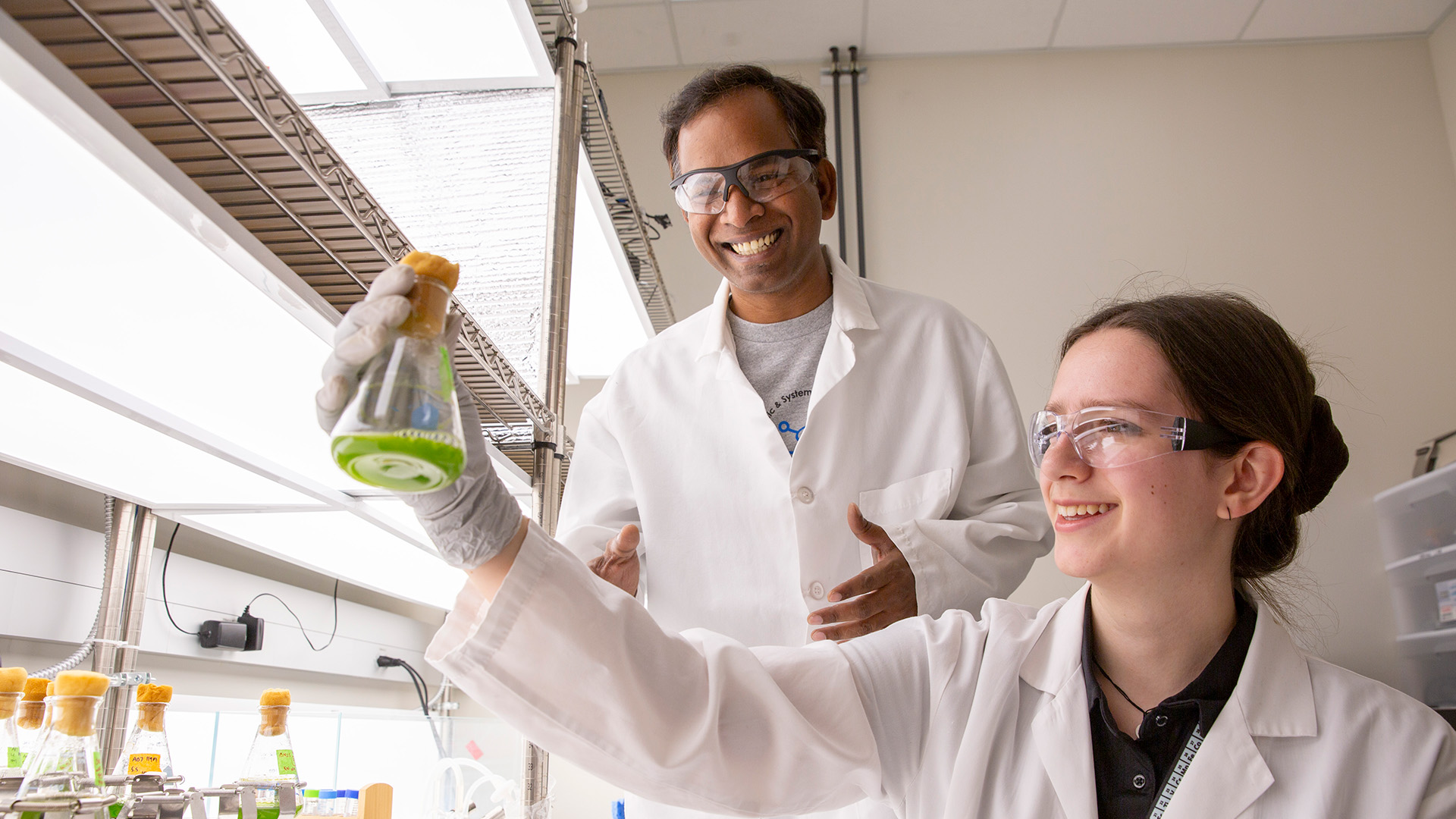
For Shira Shecter, a Fulton Schools chemical engineering undergraduate student, a fascination with sustainability has inspired both her intended career direction and her FURI project. Working under Arul Mozhy Varman, a Fulton Schools associate professor of chemical engineering, Shecter is investigating how to engineer cyanobacteria to quickly produce biofuels.
What made you want to get involved in this program? Why did you choose the project you’re working on?
My mentor encouraged me to apply for FURI. As I was going to be working on my honors thesis, it made sense to apply to FURI and get funding for my research. I have always been interested in sustainability. When I graduate, I want to make the world a better place for the next generation, so metabolic engineering and biofuels have been on my radar for a few years. This is why I wanted to work in Professor Varman’s lab, as his research intersects with what I care about.
How will your engineering research project impact the world?
Cyanobacteria can be engineered to produce biofuels, but successfully doing so can take months due to the time-consuming process of transformation and segregation, which modifies the bacteria for their intended purpose. Increasing the transformation efficiency will allow scientists to work faster, and thus the field of metabolic engineering will be able to progress faster as well.
What has been your most memorable experience as a student researcher in this program? Did you have a particular “aha!” moment during your project?
So far, the most memorable experience was designing primers. It really hit me that this is research that I am doing, using my passion to contribute to the greater scientific community. I feel like I am making a difference and doing something meaningful with my research. It was very invigorating.
Have there been any surprises in your research?
The process of transforming two plasmids into the cyanobacteria strain PCC 11901 is taking more time than expected. While not a pleasant surprise, I understand that science has unknowns, and what is important is the ability to adapt to them. My research has become more involved with transformation, ensuring that the method is fully optimized before moving onto the segregation stage.
Why should other students get involved in this program?
No class labs will be this in-depth. This is an amazing experience that will give you a practical understanding of what you are learning about in class, rather than the more theoretical and surface-level view that classes can teach.

