Sameera Shah
Computer science
Hometown: Pune, Maharashtra, India
Graduation date: Spring 2026

FURI | Fall 2025
Exploring and Explaining the Performance of PREP’s Impact on GenProg
Automated program repair (APR) repairs software bugs by automatically suggesting small changes to the software. Program repair enhancement via preprocessing (PREP) investigates one potential explanation for this: that the way that source code is represented does not match the operators used by APR tools. PREP transforms input programs before they are passed to APR tools, which helps existing tools like GenProg discover new and correct patches that were previously missed. This research evaluates the effectiveness of PREP transformations in improving GenProg’s performance to automatically improve the reliability and security of software programs.
Mentor: Stephanie Forrest

It’s hip to be square.
Students presenting projects at the Fulton Forge Student Research Expo are encouraged to download this personal QR code and include it within your poster. This allows expo attendees to explore more about your project and about you in the future.
Right click the image to save it to your computer.
Featured project | Fall 2025
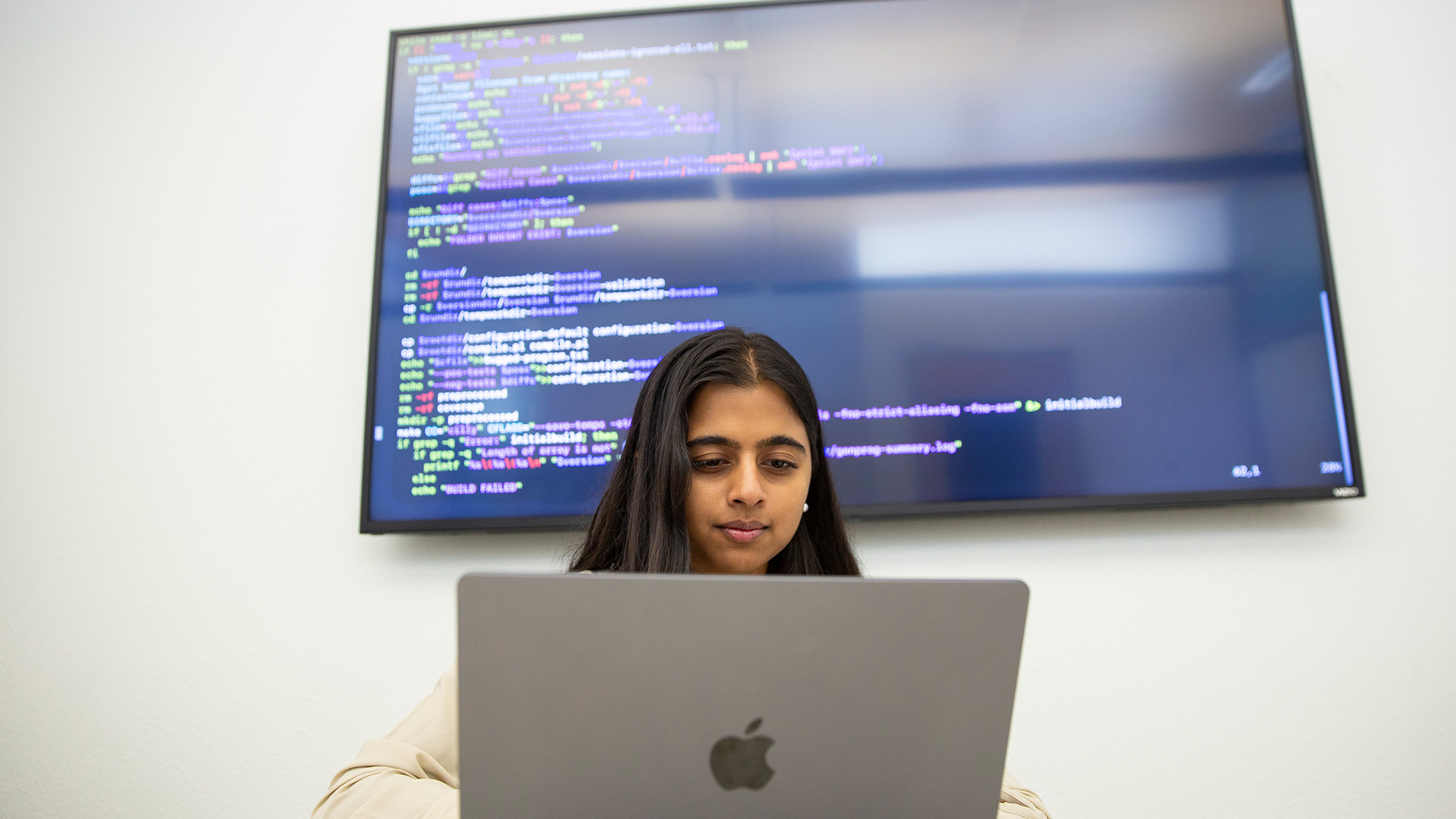
Sameera Shah, a Fulton Schools computer science undergraduate student, chose to participate in FURI to gain more research experience while working in an area beyond her expertise. Now under the mentorship of Stephanie Forrest, a Fulton Schools professor of computer science and engineering and director of the ASU Biodesign Center for Biocomputing, Security and Society, Shah is exploring the use of automated error correction in software code.
What made you want to get involved in this program? Why did you choose the project you’re working on?
I was part of the Biocomputing Scholars Program and had already become familiar with this project over the past couple of months. I decided to apply to FURI because I wanted to dive deeper into research and get more hands-on experience. I chose this project specifically because it’s in a domain I hadn’t worked in before, and I was excited about the opportunity to learn something completely new.
How will your engineering research project impact the world?
This work can have a significant impact by making software development more reliable and efficient. By automating the detection of bugs, it can reduce human error, save developers valuable time and improve the overall quality of software. In critical systems, faster and more accurate bug fixes can lower costs and ensure that technology works as intended for users everywhere.
Have there been any surprises in your research?
Yes, there have been some surprises. I was replicating results and did not anticipate it would take this much time. It ended up taking almost three to four times longer than I expected. This taught me to be more patient and helped me improve my time management by planning better for unexpected challenges.
How do you see this experience helping with your career or advanced degree goals?
Through this research, I’ve learned how to use new technologies that I wouldn’t have gotten to work with in class. I’ve also learned from my faculty mentor and postdoctoral mentor, who both bring a lot of experience from research and industry. Their guidance, along with the technical skills I’ve gained, will really help me as I start my career.
Why should other students get involved in this program?
Students should get involved with FURI because it allows you to go beyond the classroom and explore real-world applications of what you learn in class. You get the chance to work on projects that are not covered in coursework and build valuable skills that prepare you for future internships and careers. Through FURI, you’ll build connections with faculty mentors who can support your academic and career goals.